About NARS
Volunteer radio operators keeping the U.S. Navy connected in a denied or degraded communications environment.
Our Mission
Provide operational radio communications support and technical training to the United States Navy.
Our Vision
To cultivate a ready force of volunteer communication experts capable of training and supporting Navy activities in a denied or degraded communications environment.
What We Do
- Provide voice and digital radio communications.
- Support Navy exercises.
- Support real-world events.
- Coordinate communications with participating stations and activities.
When real-world events happen, there may be no internet or cell phones, and even satellite communications could be inoperable. NARS volunteers train so they’re ready to provide alternate voice and digital communications using all forms of radio.
HF, VHF and UHF Radio Communications
If the internet is unavailable, NARS uses the Winlink system, which sends email over radio between stations. Recipients with Winlink can receive mail by radio, or over the internet where it’s available in their area. Winlink also delivers email to non-radio users, because it connects to the internet wherever a link is possible.
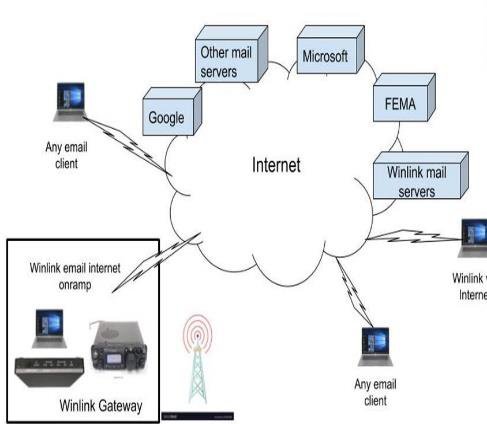
NARS uses Go Boxes, portable kits with voice and digital radio capability, to pass information from Navy facilities to other Navy commands and to agencies such as FEMA.
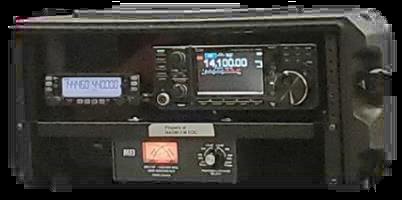
NARS fits well with the PACE (Primary, Alternate, Contingency and Emergency) communications plan. The Contingency and Emergency parts of a plan should include a variety of methods, including Winlink. Low-cost support through proven technology!
Navy High Frequency (HF) History
The origins of today’s Naval Auxiliary Radio Service trace back to the Auxiliary Amateur Radio System (AARS) during World War I. The U.S. Navy recognized the potential of wireless communication from its beginning. Within 10 days of the United States entering World War I, the Navy recruited 1,500 amateur radio operators from the more than six thousand licensed amateurs at the time.
The Secretary of the Navy approved the Navy-Marine Corps Military Affiliate Radio System (MARS) in August 1962. Department of War Instruction 4650.02 (23 December 2009) changed MARS from an affiliate to an auxiliary, giving it equal status with the Coast Guard Auxiliary and Civil Air Patrol.
HF communication is challenging. How well it works depends on the time of day, the season and solar activity. Picking the best frequency is an art, and coordinating frequencies between sending and receiving stations takes skill. As military satellites were deployed, the Navy came to rely on satellite communications because they were simple and fast: ships could receive many messages in less time than a single message took over HF.
Navy-Marine Corps MARS ended in May 2015 with a message from the Chief of Navy and Marine Corps MARS:
R 122Ø3ØZ MAY 2Ø15 FM CHNAVMARCORMARS WILLIAMSBURG VA TO ALNAVMARCORMARS
As technology advanced, the Navy grew concerned that communications satellites could be jammed during a conflict, and that ships at sea couldn’t get the weather information they needed. In 2022, LT (now LCDR) Admiraal took on the challenge of finding a cost-effective way for the Navy to regain HF resources. Demonstrations focused on West Coast earthquakes and East Coast hurricanes showed the value of HF during a disaster, and the Navy formed NARS.
After the success of exercises with Navy Region Northwest (NRNW) and other commands, Navy representatives have said they plan to use the NARS team for backup radio communications in future East Coast HURREX and West Coast Citadel Rumble exercises.
A New Name: “Service,” Not “System”
NARS was originally the Naval Auxiliary Radio System. Because NARS isn’t a system, the name was changed to Naval Auxiliary Radio Service, which better describes our mission. A new logo came with the new name.
The NW NARS Team
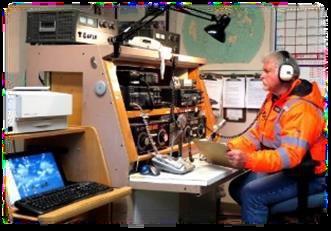
Navy Region Northwest (NRNW) built communications Go Boxes for each of its five Emergency Operations Centers (EOCs). Naval Air Station Whidbey Island (NASWI) re-tasked a former Navy and Marine Corps MARS station to become part of the NRNW Emergency Management system.
The NASWI HF Station is maintained and run by volunteer amateur operators. The team includes active-duty Navy, retired Navy and select civilians with special skills. It provides HF and VHF voice and digital capability for NRNW, and its volunteers provide:
- Equipment configuration and programming of HF and VHF transceivers
- Radio operations and procedure training for EOC staff
- Site evaluations and consulting on equipment purchases and installation
- Monthly communications checks with NRNW EOCs (first Wednesday of each month)
- Exercise and real-world event communications support
The NASWI HF station is an active part of NRNW Emergency Operations.
Learn More
Learn more about NARS in our trifold brochure, or read the latest NARS News.